Performance Risk Impact Structures Mobilisation
Turning Ecosystem Data into Trusted Market Insights
SIFI Ecosystem Window Initiative
in partnership with


The field runs on assumptions. PRISM builds evidence.
PRISM Impact Lab is the research engine of SIFI's Ecosystem Window, built with ETH Zurich and Tameo. Drawing on SIFI's five portfolio across emerging markets and developing economies, it turns audited, fund-level data into peer-reviewed, practitioner-ready evidence and policy input, replacing perceived risk with realised evidence for the whole blended finance field.
The Challenge
Five Structural Gaps Preventing Blended Finance from Scaling
- 1
Data opacity & lack of standardisation
No comparable data on pricing, returns, or risk-sharing. Opacity inflates cost of capital and prevents replication.
- 2
Risk misperception & institutional conservatism
Perceived risk far exceeds realised risk in DFIs, Basel III and Solvency II embed this misperception into regulation.
- 3
Illiquidity & poor exit strategies
Long-tailed, template-structured deter institutional investors. No secondary market infrastructure exists.
- 4
Shallow project pipeline
40% of non-bankable projects fail due to insufficient readiness. Technical assistance is underfunded and poorly timed.
- 5
Shallow project pipeline
40% of non-bankable projects fail due to insufficient readiness. Technical assistance is underfunded and poorly timed.
Introduction
Watch the introduction
The Response
A New Class of Evidence
What PRISM makes possible for the first time
Complementary to existing indices and built with practitioners, not for them, in response to the field's structural gaps, PRISM is pursuing four research workstreams, each producing a tool the market can use.
1Risk-Return-Impact Analysis
Does blended finance genuinely improve the risk-return-impact frontier?
Robust estimates across funds, asset types and geographies
2Optimal Fund Structure
Can blended finance mitigate the trade-off between impact maximisation and private capital mobilisation?
Fund structuring tool calibrated with historical data
3Impact Measurement Under Uncertainty
How can causal impact be estimated under randomised experiments?
Probabilistic, additionality framework - GBF pricing guidance
4Scalability & Market Creation
Does blended finance create sustainable investment ecosystems over time?
Evidence on sustainability market and interconnectivity costs
Library
News & Library
June 29th, 2026
SIFI Brings PRISM Impact Lab to London Climate Week
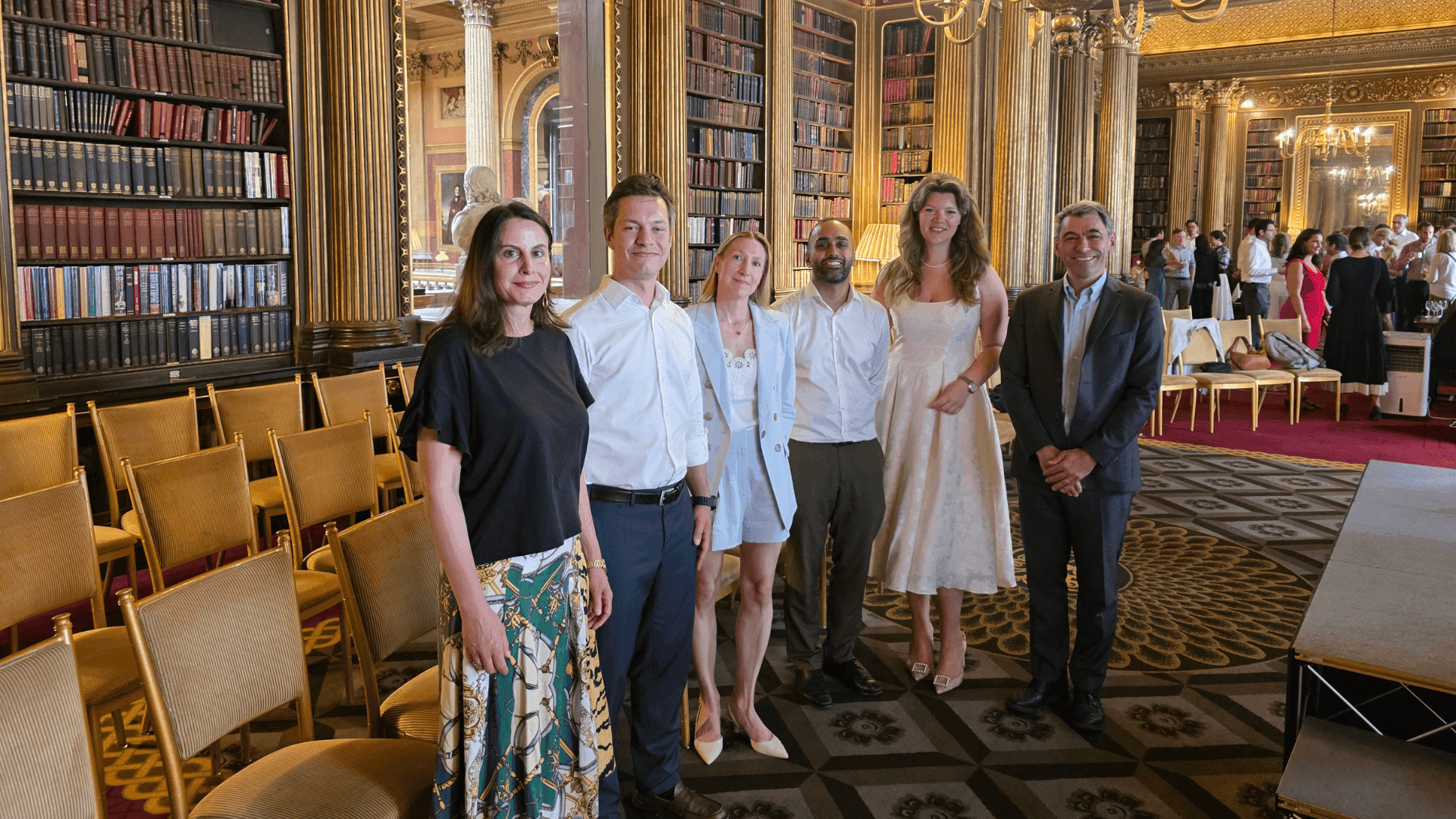
During London Climate Week 2026, the SDG Impact Finance Initiative (SIFI) convened an invitation-only executive event, What Makes Capital Catalytic?, bringing together investors, fund managers, development finance institutions, researchers and ecosystem partners to explore how stronger evidence can accelerate private capital mobilisation.
Hosted in partnership with ETH Zurich and Tameo Impact Fund Solutions, the event marked an important milestone for the PRISM Impact Lab, SIFI's field-building initiative designed to strengthen the evidence base underpinning blended finance. By combining audited fund-level data, academic research and practitioner insight, PRISM aims to improve transparency, comparability and understanding of what makes catalytic capital most effective.
The programme featured keynote presentations from SIFI CEO Tenke Zoltáni, Ramkumar Narayanan (Tameo Impact Fund Solutions) and Professor Thomas Giroux (ETH Zurich), alongside case studies from the Mirova Sustainable Land Fund II and the Next Billion Digital Growth Fund. A panel discussion with representatives from the European Bank for Reconstruction and Development (EBRD), ETH Zurich, Tameo, Mirova and Next Billion Capital Partners explored the conditions under which concessional capital can maximise private investor participation.
The discussion reinforced the need for stronger empirical evidence to support investment decisions and highlighted the importance of closer collaboration between academia, investors and practitioners in advancing blended finance markets.
The event forms part of SIFI's broader Ecosystem Window strategy to strengthen the infrastructure supporting impact finance and mobilise more private capital towards sustainable development.
Read the Event Report below.
May 17th, 2026
Event Summary: PRISM Impact Lab Executive Roundtable at Zurich Climate Week
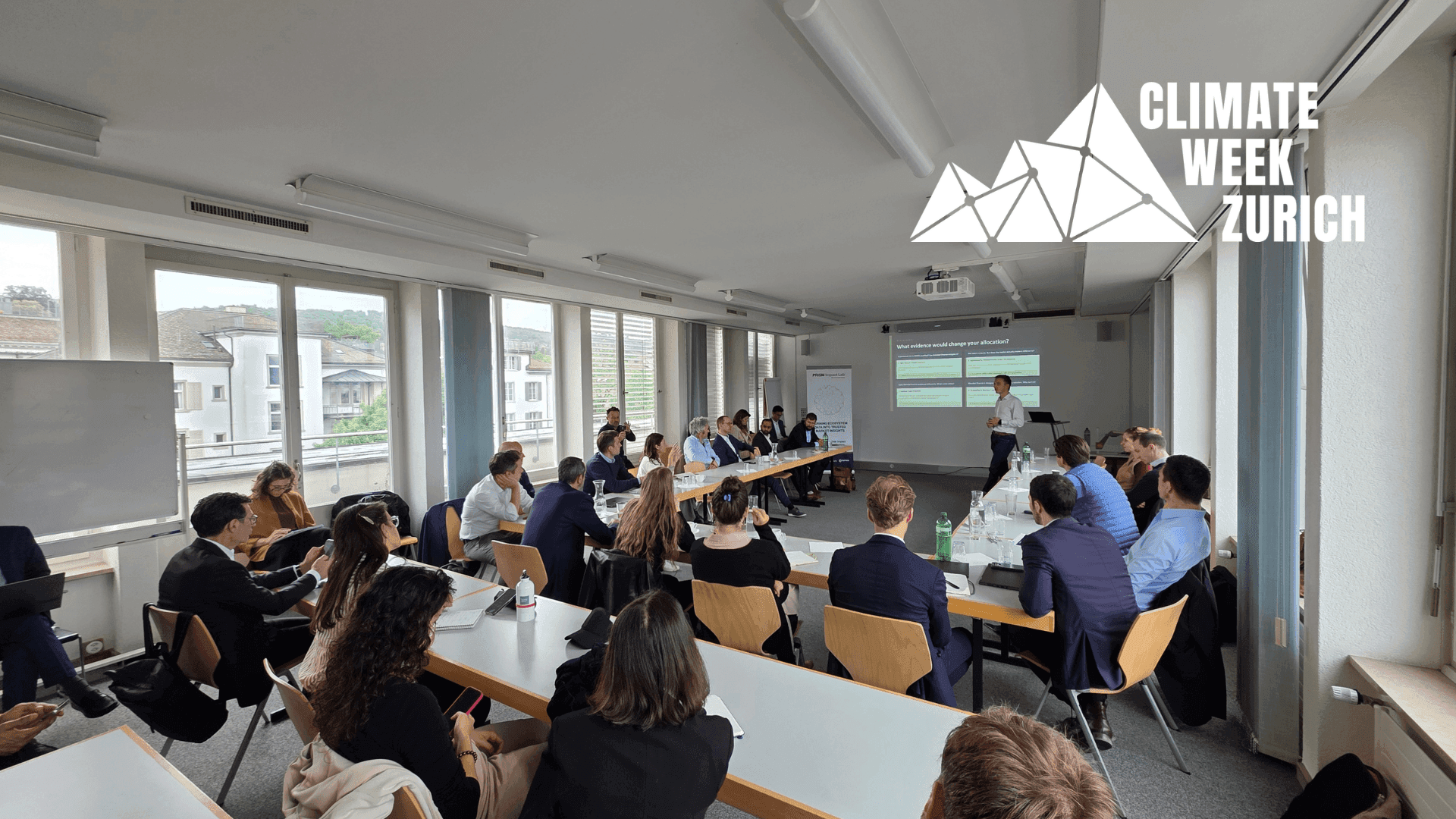
As part of Zurich Climate Week 2026, PRISM Impact Lab, a SIFI Ecosystem Window initiative, brought together institutional investors, fund managers, policymakers and researchers for an executive roundtable on one of the key barriers limiting institutional capital mobilisation for climate and impact investing in emerging markets: the lack of harmonised, decision-grade data.
Hosted at ETH Zürich under Chatham House Rule, the discussion explored how improved transparency, comparability and evidence-based risk analysis could support the scaling of blended finance structures and strengthen confidence among large allocators.
Key themes included tranche-level risk visibility, realised versus perceived risk, the role of audited financial statements, regional comparability across blended finance vehicles, and the importance of data quality, integrity and confidentiality in building institutional trust.
The discussion also reinforced the relevance of the PRISM research agenda, particularly around risk-return-impact dynamics, de-risking efficiency, fund structure optimisation and additionality measurement. Participants noted that the growing availability of audited fund and tranche-level data creates new opportunities to address these questions empirically and strengthen the evidence base underpinning blended finance markets.
Key insights from the roundtable have been captured in the full Event Report, available below.
December 16th, 2025
SIFI Launches Strategic Research Collaboration with ETH Zurich and Tameo
The SDG Impact Finance Initiative (SIFI) has launched a strategic research collaboration with ETH Zurich (Department of Management, Technology, and Economics – Centre for Sustainable Finance), led by Prof. Dr. Thomas Giroux, and Tameo, led by CEO Safeya Zeitoun, to advance transparency, effectiveness, and field-building in blended finance and impact investing.
This collaboration is part of SIFI’s Ecosystem Window, a strategic pillar designed to position SIFI as a trusted insight provider, ecosystem convener, and catalyst for systemic change. It reflects SIFI’s ambition to complement catalytic capital deployment with data-driven research and actionable insights that enhance the performance and credibility of impact finance.
The joint research agenda will focus on:
• Reducing barriers to impact investing for institutional investors
• De-risking structures and blended finance design
• Bottlenecks to private capital mobilisation
• Data transparency and fund architecture
• Investor engagement and institutional participation
ETH Zurich will lead the academic research, develop frameworks for de-risking instruments, conduct benchmarking surveys, and host a policy convening to disseminate early results. Tameo will expand its PAIF database to include 30–50 blended finance vehicles, generating structured data on fund layering, return patterns, and mobilisation ratios. SIFI will coordinate the partnership, fund Year 1 implementation, and lead outreach through dedicated stakeholder workstreams involving DFIs, philanthropic actors, and private capital providers.
The Ecosystem Window is designed to evolve into a long-term platform for generating data-driven and research-backed guidance, supporting strategic policy engagement, and building the infrastructure needed for a more transparent and efficient impact finance market.
Join PRISM as a partner, contributor or subscriber
Download the engagement memo, subscribe to the SIFI Newsletter, or email us directly through the SIFI contact form.